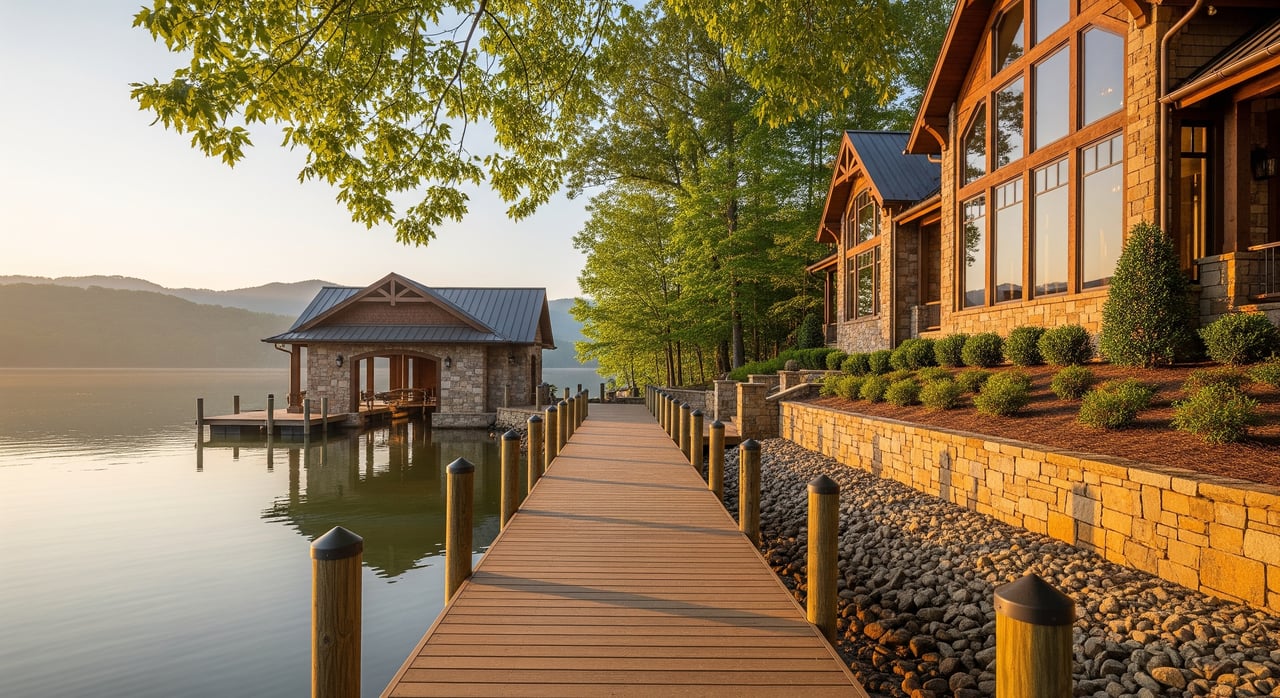
Thinking about buying or selling on Lake Chatuge and wondering how the appraisal will shake out? You’re not alone. Lakefront properties in Hiawassee are unique, and value comes down to more than square footage and recent sales. In this guide, you’ll learn exactly what appraisers look for, how lake features factor into price, and how to prepare so your valuation reflects the true appeal of your property. Let’s dive in.
How appraisers value lakefront homes
Sales comparison leads the way
For single-family lakefront homes, appraisers rely primarily on the Sales Comparison Approach. They identify recent, arms-length sales that buyers would see as realistic substitutes, then adjust for differences like frontage, dock rights, view, and slope. Because no two waterfront parcels are the same, paired-sale analysis and market-derived adjustments are used instead of one-size-fits-all formulas.
Cost and income, when they help
The Cost Approach can be helpful when improvements are newer or unusually customized, but it often carries less weight when land value dominates, as it often does on the water. The Income Approach can matter if the property is used as a rental and there is credible local rental data. For seasonal vacation rentals, appraisers will look for reliable income and expense information before relying on it.
Highest and best use matters
Appraisers also determine the property’s highest and best use. On Lake Chatuge, that might be year-round residential, seasonal/vacation, or a mixed use such as personal use with short-term rental potential. The intended use influences which sales are truly comparable. Appraisers often extract a local “water premium” from the market rather than applying general rules.
What drives value on Lake Chatuge
Physical, legal, and cost-related factors
- Water frontage (linear feet). More frontage typically supports higher value, but the premium per foot varies based on shoreline shape, slope, and how usable the water’s edge is.
- Shoreline type and slope. Gentle slopes with stable shoreline usually command more value than steep banks. Bluffs can deliver great views but may bring erosion control costs.
- Dock, boathouse, and slip. A permitted, deeded private dock usually adds value, influenced by condition, design, and how the local market views private versus shared facilities.
- Riparian and water rights. Deeded rights and direct access are generally more valuable than shared or easement access. Appraisers confirm documentation when it impacts marketability.
- Permits and restrictions. Documented permits and compliance with shoreline rules support value. Missing or unclear permits for docks or shoreline work can reduce marketability.
- Flood risk and FEMA zones. Special Flood Hazard Areas increase insurance and financing requirements and can reduce value due to higher carrying costs and risk.
- Septic, well, and utilities. For non-public systems, age, capacity, and condition matter to buyers and lenders.
- Erosion and shoreline stabilization. Needed repairs or stabilization can lead to negative adjustments, especially if costs are significant.
Market-perception and lifestyle factors
- View quality. Full-lake vistas typically bring a measurable premium over partial or seasonal views.
- Privacy and buffers. Tree cover and spacing from neighbors can boost demand where buyers prize a quiet, natural feel.
- Accessibility to Hiawassee. Proximity to downtown services, groceries, and regional roads is a plus for many buyers.
- Lake size and recreation. Lake Chatuge’s size and recreational reputation support demand compared to smaller water bodies.
- HOA rules and amenities. Community docks, shared ramps, and covenants shape utility and may affect individual lot premiums.
- Seasonality. In a second-home market, comparable sales may be limited off-season. Appraisers may use a broader search window.
Common adjustments you might see
Appraisers often adjust for frontage length, dock presence and condition, view quality, lot size and usable area, flood zone, utility type, road access, and the age/condition of improvements. Adjustments are ideally supported by local paired-sales analysis rather than national rules of thumb.
Hiawassee and Towns County: local context
Lake Chatuge spans Towns County, Georgia and parts of North Carolina, and is managed in part by the U.S. Army Corps of Engineers. Because buyers often view both sides of the same lake as substitutes, appraisers may consider cross-state sales if they are truly comparable. That said, local buyer preferences and access to Hiawassee’s amenities remain important when deciding which comps carry the most weight.
Permitting and compliance also matter. Appraisers may review documentation related to U.S. Army Corps of Engineers policies for lake structures, Georgia Department of Natural Resources guidance, FEMA flood maps for Towns County, Towns County Environmental Health records for septic, and local planning and zoning rules for setbacks and shoreline buffers. If an HOA is involved, covenants that limit docks, short-term rentals, or shoreline modifications can affect marketability and will be considered.
Sellers: how to prepare for the appraisal
- Gather deed and water-rights documentation, including any language about riparian rights or access.
- Provide dock ownership and permitting records, plus recent service or maintenance receipts.
- Share surveys that show shoreline frontage and any recent shoreline work with permits.
- Offer septic and well records and any recent inspections, repairs, or capacity upgrades.
- Prepare a list of recent comparable sales your agent used to price the home, especially true waterfront comps.
- Supply clear photos of the shoreline, view corridors, dock condition, and usable yard areas.
- Note any HOA amenities or restrictions and how they relate to your lot’s utility.
These items help the appraiser see the property’s true utility, reduce uncertainty, and support a value that reflects market reaction.
Buyers: questions to ask and verify
- Is the dock deeded and permitted, and do rights transfer at closing?
- Are there recorded easements, setbacks, or covenants that limit use or future improvements?
- What is the current FEMA flood zone and are map changes pending?
- Are there outstanding permits or enforcement issues for shoreline structures?
- Can you obtain a recent shoreline survey and septic inspection during due diligence?
- How do true waterfront sales compare with water-view or access-only properties nearby?
How appraisers handle common challenges
- Limited comparable sales. Appraisers may expand the time frame, include both GA and NC sides of the lake when appropriate, and use paired-sales to isolate a waterfront premium.
- Unique structures. Large boathouses or one-off features may require a cost approach or deeper market study to reflect buyer reaction.
- Seasonal water levels. Appraisers will document typical levels and adjust utility based on how buyers perceive seasonal access and views.
Financing and insurance considerations
If a property lies within a FEMA Special Flood Hazard Area, most federally backed lenders will require flood insurance, which affects affordability and may influence value. Some lenders also have underwriting requirements related to docks or environmental considerations. If you plan to use the home as a vacation rental, be prepared to provide credible local rental income and expense data; the appraiser may give the Income Approach consideration if rentals are a material part of market value.
Quick checklist for lakefront readiness
- Confirm dock rights, permits, and condition.
- Verify shoreline frontage, slope, and any stabilization needs.
- Check flood zone status and insurance implications.
- Organize septic, well, and utility records.
- Compile relevant lakefront comps, ideally recent and local.
- Understand HOA rules and how they affect utility or rental plans.
A thoughtful, well-documented file makes it easier for the appraiser to see the full picture and support your value with local market evidence.
Ready to move forward with confidence on Lake Chatuge? For local guidance on pricing, preparation, and the nuances that matter most in Towns County, reach out to Greg Adams. You’ll get relationship-first service and clear, data-backed advice from a trusted, hometown expert.
FAQs
Do private docks always increase value on Lake Chatuge?
- Usually yes, if the dock is permitted, deeded, and in good condition. The exact uplift is market-driven and supported by comparable sales.
How much does lakefront add versus off-lake in Hiawassee?
- There is no universal percentage. Appraisers measure the premium using local paired sales and recent market evidence for Lake Chatuge.
What’s the appraisal difference between lakefront and lake-view homes?
- Lakefront implies direct, typically private access to the water, while lake-view offers visual access only. Each carries different demand and pricing in the market.
Will erosion or a dock issue hurt my appraised value?
- Yes. Appraisers reflect condition, needed repairs, and cost-to-cure where significant, which can lower the indicated value.
Can appraisers use North Carolina comps for a Hiawassee property?
- Yes, when the market treats those homes as substitutes. Appraisers explain why cross-jurisdictional comps are appropriate on the same lake.
Will the appraiser use an Income Approach for a short-term rental?
- Possibly, if there is reliable local rental and expense data and rentals are a material factor in market value. Otherwise, the Sales Comparison Approach remains primary.