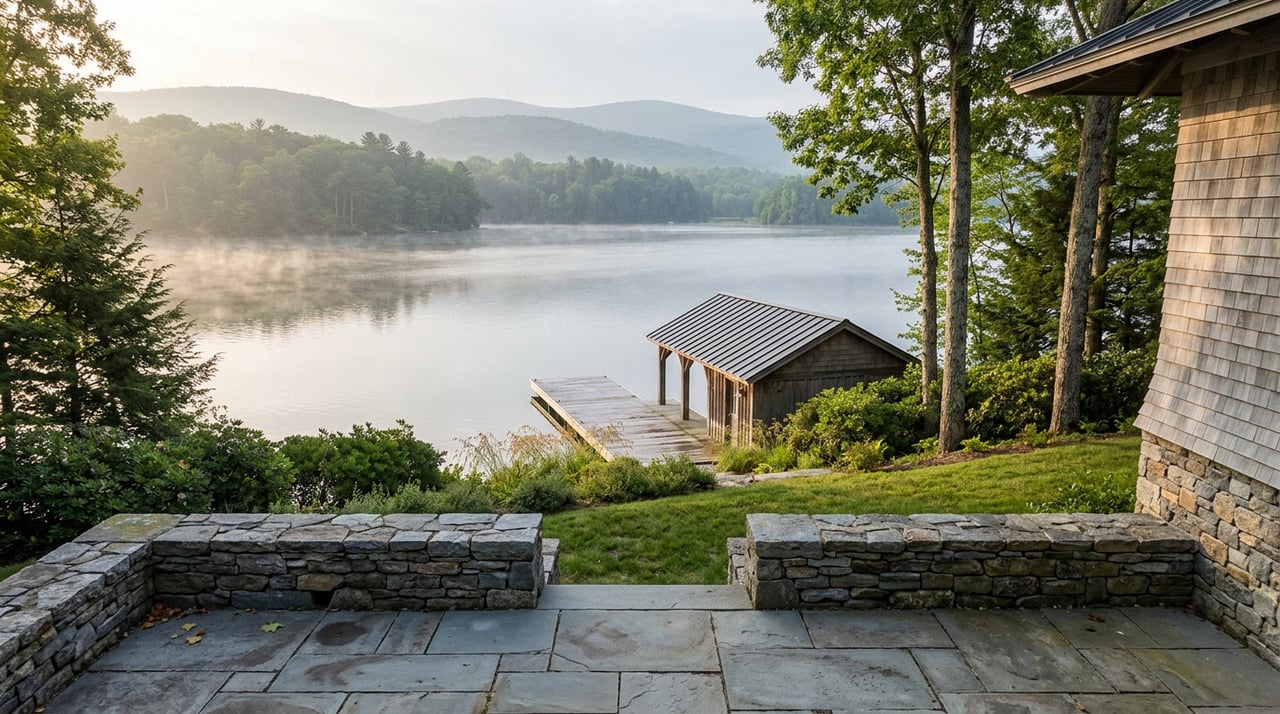
A buyer closes on a lakefront home near Hiawassee. The dock is already built, already permitted, already sitting in the water exactly where it's always been. The assumption is simple: the dock came with the house, so the permit did too.
It didn't. And that gap between what buyers assume and what the Tennessee Valley Authority actually requires is only the smaller half of a bigger story that's still being written on Lake Chatuge right now, one that some local listing copy is already getting ahead of.
The paperwork nobody mentions until closing
Lake Chatuge is a TVA reservoir, which means every dock, seawall, and shoreline structure on it exists under a Section 26a permit issued by the federal government, not the county. That permit is tied to a person, not a property. When ownership changes, the new owner has 60 days from closing to apply for their own permit in their name. TVA's own guidance is direct about this: permits do not automatically transfer with property ownership.
The fee difference is worth knowing before you're standing at the closing table. Transferring an existing, compliant dock into your name typically runs $250. Building something new, or modifying a dock that isn't already built exactly as its permit describes, runs $500 and a fresh review that can take up to 120 days. Only docks that match their previous permit qualify for the cheaper transfer. If the seller added a covered second story to their dock at some point, or made any change TVA never signed off on, that's not a small cosmetic issue. It's the kind of thing that can turn a straightforward transfer into a modification request with a longer timeline and a bigger bill.
This is a due diligence step, not a closing formality. Before you write an offer on a Chatuge lakefront property, ask the seller for a copy of the current Section 26a permit and walk the dock against it yourself.
Why 2025 was a quieter year on the lake
Lakefront sales data compiled by local Realtors shows 26 lakefront homes sold on Lake Chatuge in 2025, down from 36 the year before. Average sold prices slipped too, from roughly $1,212,483 in 2024 to about $1,194,798 in 2025.
That's a real, specific dip, and it lines up with a specific cause. Beginning in early 2025, TVA disclosed that Chatuge Dam's 82-year-old spillway carries more risk than the agency is willing to tolerate, and that fixing it will require drawing the lake down well below its normal winter pool for an extended period. For a market built almost entirely on lake access, that kind of announcement doesn't need a single drawdown to actually happen in order to cool sales. The uncertainty alone did the work.
The "it's resolved" story is getting ahead of itself
Some current listing narratives describe the spillway issue as settled. It isn't, and the distinction matters for anyone shopping Chatuge lakefront today.
Here's where TVA actually stands. In June 2025, the agency eliminated its most severe option, an eight-year rehabilitation that had caused real alarm among local business owners, and narrowed its focus to three remaining alternatives. TVA's own project page, in its most recent update from January 2026, still states plainly that the agency does not have a preferred alternative. As of that update, TVA was targeting a draft Environmental Impact Statement for early 2026, with a final decision not anticipated until early 2027, and construction on whichever option is chosen expected to begin sometime between summer 2028 and fall 2029.
| Alternative | What it involves | Drawdown |
|---|---|---|
| C | Concrete liner installed over the existing spillway | Up to two off-season years |
| D | New spillway built, old one abandoned | Up to two non-consecutive off-season years |
| E | New gated spillway plus repairs to the existing structure | Two off-season years, similar to C and D |
Every remaining alternative shares two things: none would drop the lake below 1,908 feet, about 10 feet under normal winter pool, and none is currently planned to touch the Memorial Day through Labor Day stretch that the local tourism economy depends on. That's a genuine improvement over the original eight-year worst case. But "improved" and "decided" are different words, and TVA has said outright it won't choose between C, D, and E until early 2027.
The environmental group MountainTrue, which submitted formal comments during the project's public scoping period, makes a point worth repeating here: Lake Chatuge is unusual among TVA reservoirs because most of its 132 miles of shoreline is privately owned rather than agency-controlled, and Hiawassee itself sits directly on the upper end of the lake. That's exactly why the group's comment letter states the real estate market has already felt the effects of the announcement alone, months before any construction has started.
What this actually means if you're buying now
None of this should scare a buyer off Lake Chatuge. It should change what questions get asked before an offer goes in.
A drawdown, whenever it happens, is planned for off-season months and is not expected to touch summer lake levels under any of the three remaining alternatives. That's a meaningfully different situation than the eight-year, possibly summer-inclusive scenario that was on the table in early 2025. If you're buying a primary residence or a property where winter lake views matter less than summer recreation, the current plan is far more forgiving than the headlines from last year suggested.
Where it matters more is for anyone counting on winter dock access, anyone financing based on projected short-term rental income during shoulder seasons, or anyone buying near the upper end of the lake where water levels drop first and most visibly. A final decision in early 2027 also means today's buyer could own the property through at least one off-season drawdown before construction ever wraps.
Questions worth asking before you write an offer
- Ask the seller for their current Section 26a permit and compare it to the dock as it actually sits in the water.
- Ask whether any dock work has been done since the last permit was issued, and if so, whether TVA approved it.
- Ask where on the lake the property sits. Upper-lake coves near Hiawassee will see levels change first in a drawdown; water near the dam itself is affected differently.
- Factor a 60-day post-closing window and the transfer application into your first 90 days of ownership, not as an afterthought.
- If short-term rental income is part of your math, model it against a lake that may run lower during at least one off-season before this project concludes.
A few direct answers
Will the lake be low every summer starting now? No. Under all three remaining alternatives, TVA has said drawdowns are planned for off-season months, not the Memorial Day to Labor Day window most owners and renters care about most.
Does a "grandfathered" dock mean I don't need a permit? No. Grandfathering only protects a dock's existing design from having to meet newer construction standards. It does not exempt a new owner from filing a Section 26a transfer application after closing.
When will TVA actually decide? Not before early 2027, based on the agency's own project timeline. Anything you read describing the spillway issue as fully settled is ahead of where the process actually stands.
Buying on Lake Chatuge right now isn't a gamble, but it is a purchase that comes with a live federal process attached to it, one most buyers never think to ask about until it's already their problem. If you want someone who's actually tracking where TVA stands and what it means for a specific dock, a specific cove, or a specific closing date, that's the conversation worth having before you write an offer, not after. Greg Adams has been watching this process unfold alongside the rest of the Hiawassee community, and he's happy to walk through what it means for the property you have in mind. Go with Greg!